

- Status
- Verified
- Base model
- …
- Lineage
- …
- Unchanged from base
- …
- Trending
- #10
- Downloads, 30 days
- 404
- Weights
- 220 GB
- Revision
Pika H3 Flex is a post-trained H3 model, designed to give professional creators the flexibility and speed to explore with precision. Optimized for greater control, it generates video with synchronized audio in six sampling steps and supports up to 12 reference inputs, with shot direction through references and prompts.
At a glance
- Task
- Image to video
- Input
- image
- Output
- video
- Parameters
- 33.1B
- Precision
- BF16 100%
- Format
- Safetensors
- Library
- diffusers
- License
- other
- Base model
- Adapter for MiniMaxAI/MiniMax-H3
- Released
- Oct 2026
- Updated
- Oct 2026
- Likes
- 151
- Downloads, all time
- 87
Run it
Pinned to the indexed revision.
from diffusers import DiffusionPipeline

pipe = DiffusionPipeline.from_pretrained("Pika-Labs/Pika-H3-Flex", revision="3ff166447d5edb1406107ab8370c42000ce173e4")
Through the hub: the same tools, each file from a source that is up (Hugging Face, ModelScope, IPFS), at this revision. The second line checks every file against its address.
export HF_ENDPOINT=https://gethologram.ai
cd "$(hf download Pika-Labs/Pika-H3-Flex --quiet)" && curl -s $HF_ENDPOINT/Pika-Labs/Pika-H3-Flex/resolve/main/SHA256SUMS | sha256sum -c --quiet
Hosted inference, live now
Spaces
Used in 4 Spaces.
Read the full model card

Pika H3 Flex
Built for professional iteration.
Six-step generation · Omni-reference · Native 480p / 768p · Up to 4K via Pika API
Pika API Create with Pika Tech Blog GitHub Hugging Face
Model weights · Watch samples · Quickstart · Prompt guide · Pika API extensions
Pika H3 Flex is a post-trained H3 model, designed to give professional creators the flexibility and speed to explore with precision. Optimized for greater control, it generates video with synchronized audio in six sampling steps and supports up to 12 reference inputs, with shot direction through references and prompts.
Pika’s hosted API extends this workflow with 1080p, 2K and 4K video generation, audio stems and prompt enhancement. Local open-weight inference supports native 480p / 768p video with mixed stereo audio.
Ideal for multi-shot storytelling · Motion graphics · Product films · Reference-guided animation
Watch the model
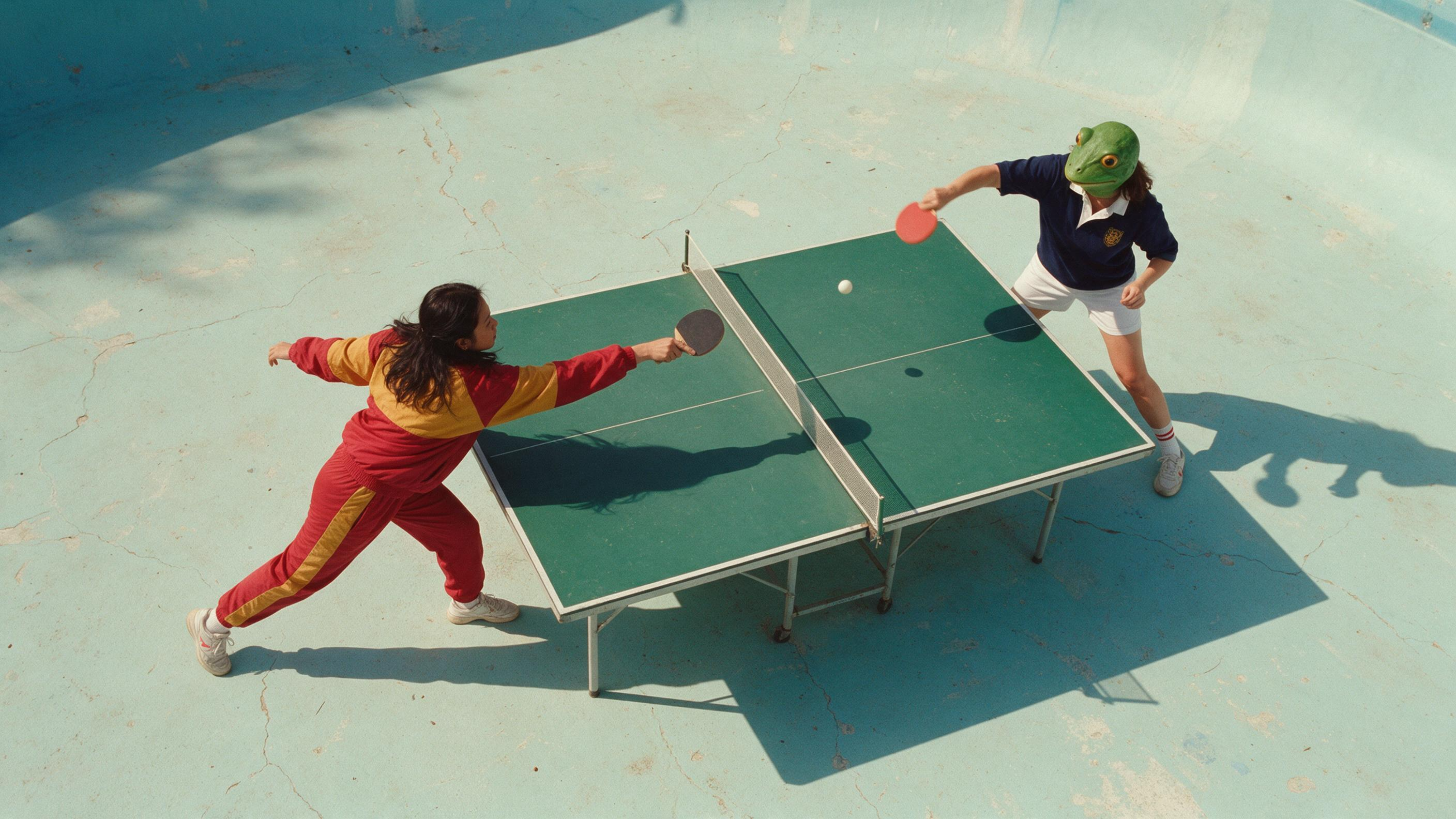
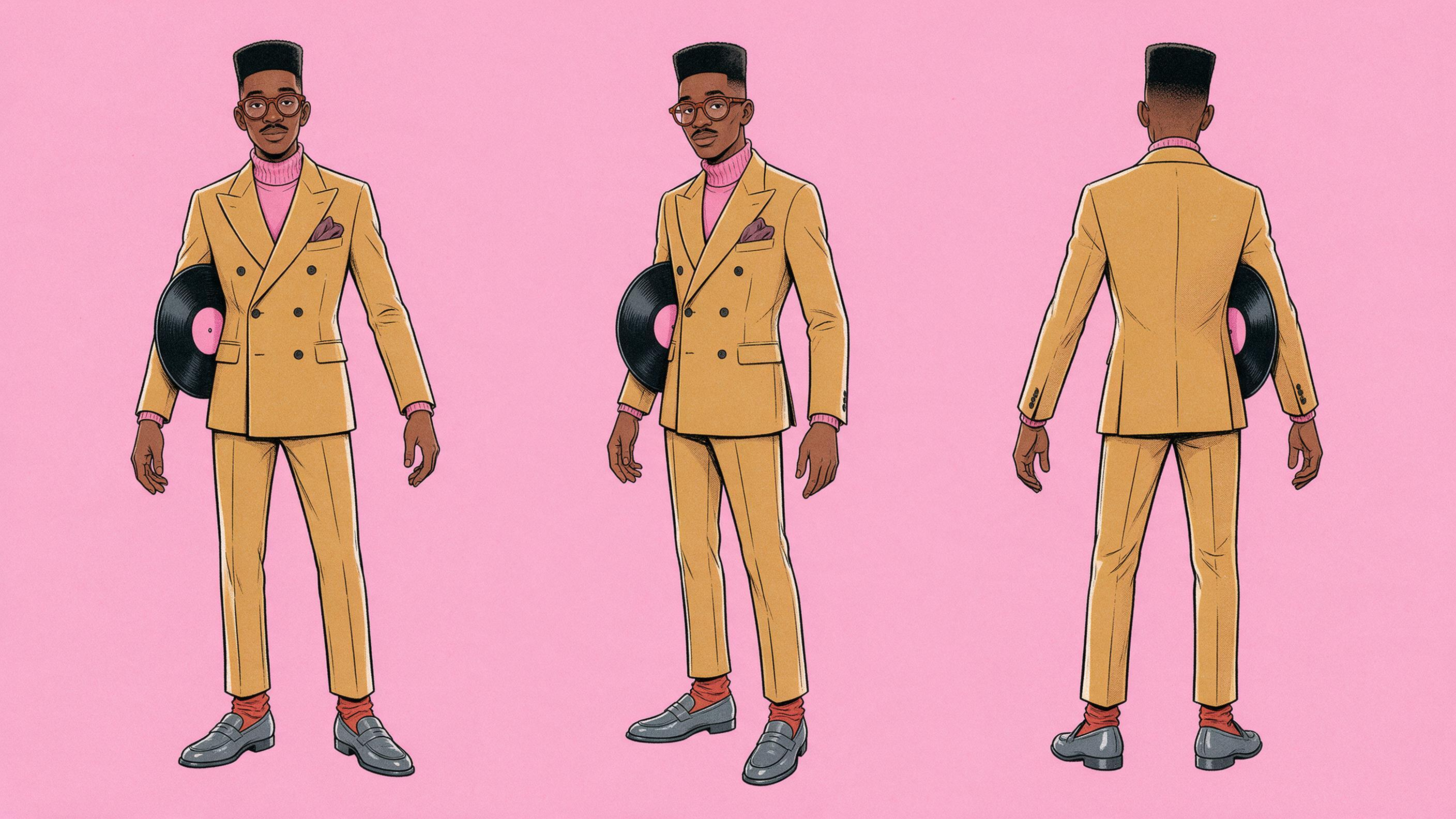
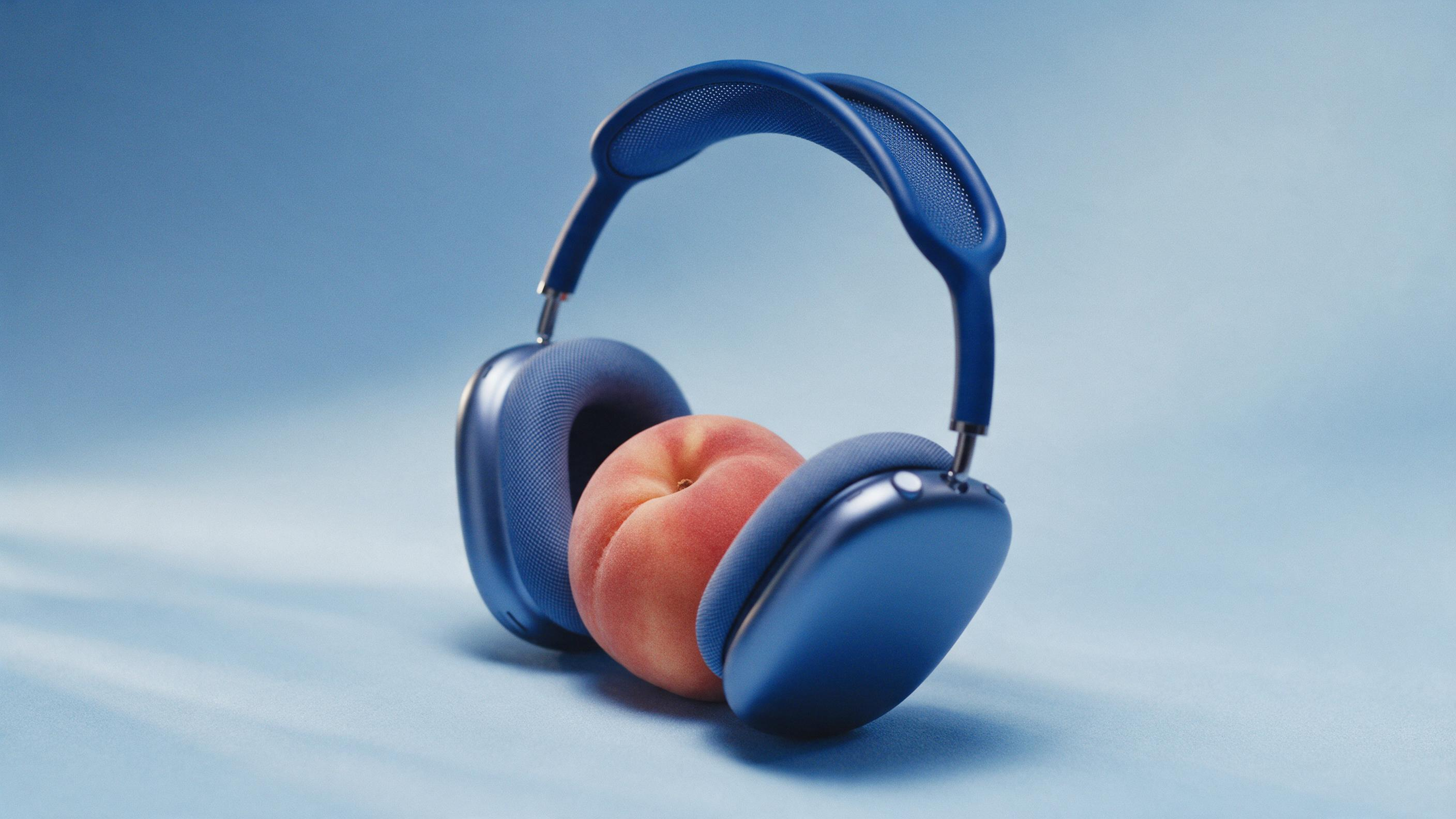
Explore camera choreography, cinematic storytelling, graphic design and reference-guided animation. Play a clip with sound; expand its prompt for the generation description.
Prompts and input assets · Showcase metadata
These are creative showcases, not release-validation renders or throughput benchmarks. Exact reproduction with the released package is not guaranteed.
System overview
Pika H3 Flex is one video-and-audio model family with two task adapters: FL2VA for text and endpoint-frame conditioning, and Ref2VA for multimodal references. It builds on MiniMax-H3 and generates video with synchronized stereo audio in six sampling steps.
The inference pipeline encodes the prompt and input media, generates video and audio latents with the selected Pika H3 Flex adapter, then decodes and combines them into an MP4. The package downloads the pinned base components and adapter automatically. Use the prompt guide to describe scenes, motion, dialogue, ambience and music; optional prompt enhancement is available through the Pika API.
Input and output specifications
| Category | Specification |
|---|---|
| Input modalities | Text; first/last images; image, video and audio references, depending on the selected mode |
| Native output resolution | 480p / 768p across all 11 supported aspect ratios; exact pixel dimensions follow the selected aspect-ratio bucket |
| Output duration | Requested integer durations of 5–15 seconds; actual length follows the model frame grid |
| Output aspect ratios | 21:9, 16:9, 3:2, 4:3, 5:4, 1:1, 4:5, 3:4, 2:3, 9:16, 9:21; dimensions use the packaged resolution buckets |
| Output frame rate | 24 fps |
| Output audio | 32 kHz stereo, mixed into the generated video |
| Output files | MP4 with H.264 video and AAC audio, plus JSON generation metadata |
| Prompt input | Text or a UTF-8 prompt file; 1–8,000 characters |
| Sampling | Six generator evaluations using the released adapter's sampling schedule |
Durations are rounded up to the supported frame grid: a 5-second request produces 124 frames (about 5.17 seconds), and a 15-second request produces 362 frames (about 15.08 seconds). Native resolution and aspect ratio jointly determine the actual canvas dimensions.
Generation modes and reference limits
| Mode | Inputs | Adapter / CLI task |
|---|---|---|
| Text to video and audio | Prompt, without input media | FL2VA / t2va |
| First-frame conditioning | Prompt and one opening frame | FL2VA / i2va |
| Last-frame conditioning | Prompt and one ending frame | FL2VA / l2va |
| First-and-last-frame conditioning | Prompt and both endpoint frames | FL2VA / fl2va |
| Multimodal references | Prompt and ordered image/video references, optionally with audio references | Ref2VA / ref2va |
Ref2VA accepts up to 9 images, 3 videos and 3 standalone audio clips, with 12 reference files total. At least one image or video is required. Each video or standalone audio clip must be 2–15 seconds; combined video duration and combined standalone-audio duration must each be at most 15 seconds. A video's embedded soundtrack stays with that video and does not count as an additional standalone audio file.
These are accepted input limits, not a guarantee that every maximum-size combination fits GPU memory. The package runs one request on one GPU, with optional CPU offload. See hardware requirements and tested configurations for representative H100 results and memory guidance.
Pika API extensions
Extend your generation workflow with Pika’s hosted endpoints:
| Feature | Support | Endpoint |
|---|---|---|
| Higher-resolution video | Generate 1080p, 2K and 4K video from a draft video | Draft to video |
| Audio stems | Obtain separate audio stems | Audio stems |
| Prompt enhancement | Enhance generation prompts | Prompt enhancement |
These optional hosted services are separate from the downloadable adapters and local inference package. The specifications above describe local model inference; see each endpoint’s documentation for its API capabilities and usage.
Run it
Clone the inference repository and follow its pip, Conda, or Docker quickstart. The pika-h3-pro command downloads the pinned base components and selected adapter. See the prompt guide for structured prompts.
Weight packages
| Directory | Base trunk | Format |
|---|---|---|
fl2va/ |
transformer |
FP32 LoRA, rank/alpha 128 |
ref2va/ |
transformer_ref |
FP32 LoRA, rank/alpha 128 |
The repository also includes Diffusers-format MiniMax-H3 base components: transformer/, transformer_ref/, text_encoder/, vae/, audio_vae/, tokenizer/processor assets and scheduler configurations, assembled by modular_model_index.json. These transformer checkpoints are base models; apply the matching Pika adapter separately. The Diffusers examples perform both loading steps explicitly. Base components occupy approximately 210 GB in total; a selected workflow loads only its matching transformer partition.
Each manifest records the public release ID, pinned base revision, adapter checksum, conditioning precision and exact six-step sampling schedule. Generic six-step Euler sampling is not equivalent. Base components: MiniMaxAI/MiniMax-H3.
Other inference platforms
- ComfyUI — See the Comfy tutorial; use the R2V workflow, FL2VA workflow or T2V workflow. Comfy-format BF16 LoRA weights are included in
comfy/loras/; see the adapter guide for downloads and checksums. - Hugging Face Diffusers — See the official Pika H3 Flex documentation and our installation and generation examples for FL2VA first-frame conditioning and Ref2VA image/video references. The examples use the public upstream Diffusers commit pinned in
examples/requirements-diffusers.txt; this installation is separate from the Pika CLI above.
Hardware and examples
The Pika CLI inference package runs one request on one GPU. Representative 480p and 768p CLI requests passed on H100 80GB. Large requests may require --cpu-offload and substantial host RAM. See hardware requirements and tested configurations. The separate Diffusers examples have their own installation and validation notes in examples/README.md.
The featured showcase manifest includes prompts, input assets and video hashes. Seeds, exact checkpoint revisions and service preprocessing for these examples are unspecified.
License
These adapters are Model Derivatives of MiniMax H3 and are distributed under the MiniMax H3 Community License Agreement.
See NOTICE for the required MiniMax notice and Mellis, Inc. copyright statement.
Bundled MiniMax-H3 base components retain the MiniMax agreement. The Qwen encoder and associated tokenizer/processor assets are covered by Apache 2.0; see the component sources and notices. The example Python code is covered by Apache 2.0; that code license does not cover model weights or example media.
Attribution
If you use these adapters in research or a product, we'd appreciate a credit to Pika and a citation:
@misc{pika2026flex,
  title  = {Pika H3 Flex Technical Deep Dive},
  author = {{Pika Research}},
  year   = {2026},
  howpublished = {\url{https://pika.art/blog/pika-h3-flex-research}}
}
Derived on Oct 30, 2026 from Hugging Face at revision 3ff16644, README.md .
96 files, 220 GB. Every download is checked against its address.